
Homeowner’s Guide to Foundation Cracks: Home Inspections
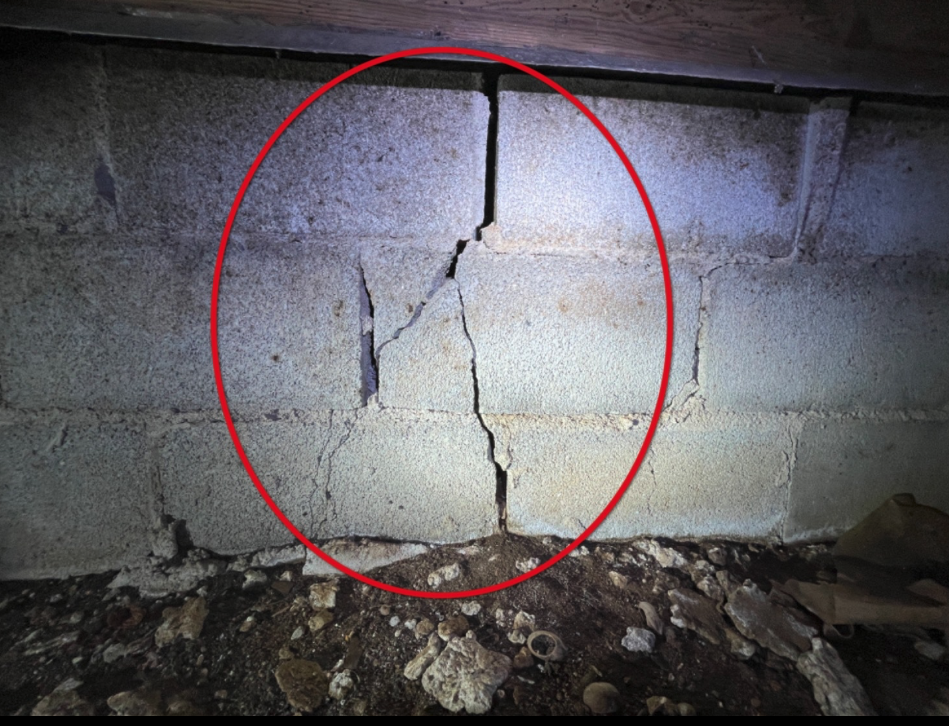
Few things alarm homeowners more than discovering cracks in a foundation wall. While some cracks are harmless signs of normal settling, others can indicate serious structural concerns that require professional evaluation. Understanding the different types of foundation cracks can help you make informed decisions about your home’s condition and maintenance needs.
At Smith & Smith Home Inspections of Murfreesboro, TN, we regularly inspect foundation conditions throughout the Greater Middle Tennessee area. This guide will help homeowners recognize common foundation crack patterns and understand what they may mean.
Why Foundation Cracks Occur
Foundation walls are subjected to constant pressure from the soil surrounding them. Changes in moisture levels, temperature fluctuations, settling soils, poor drainage, and construction issues can all contribute to cracking over time.
Not every crack indicates a structural problem, but understanding the pattern, width, and location of a crack can provide valuable clues about its cause.
Vertical Foundation Cracks
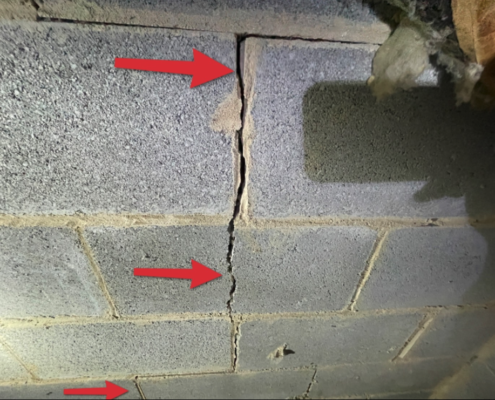
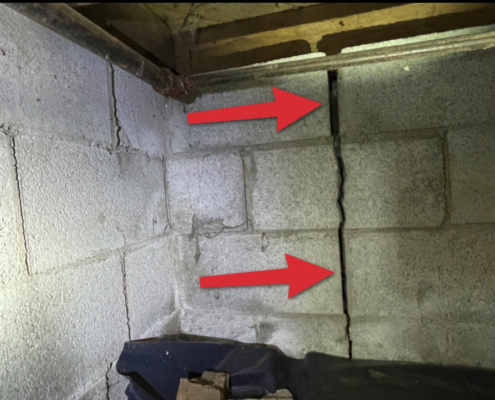
Vertical cracks run straight up and down or nearly so.
What Causes Vertical Cracks?
Vertical cracks are among the most common foundation cracks and are often caused by:
- Normal concrete shrinkage during curing
- Minor foundation settlement
- Seasonal soil movement
Are Vertical Cracks Serious?
In many cases, narrow vertical cracks less than 1/8 inch wide are not considered structurally significant. However, wider cracks or cracks that continue to grow should be monitored and evaluated.
What Homeowners Should Look For
- Cracks wider than 1/4 inch
- Water intrusion through the crack
- Evidence of recent movement
- Multiple vertical cracks in the same area
Horizontal Foundation Cracks
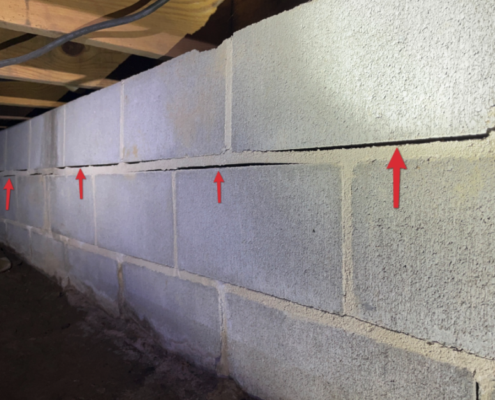
Horizontal cracks run parallel to the ground and are often considered more concerning than vertical cracks.
What Causes Horizontal Cracks?
Horizontal cracking frequently results from excessive lateral pressure against the foundation wall, including:
- Expansive clay soils
- Poor drainage
- Hydrostatic pressure from groundwater
- Frost-related soil movement
Are Horizontal Cracks Serious?
Horizontal cracks can indicate that a wall is bowing inward under pressure. These cracks often warrant further evaluation by a qualified structural professional.
Warning Signs
- Bowing or leaning walls
- Cracks that extend across large sections of the wall
- Water seepage
- Increasing crack width over time
Stair-Step Cracks in Masonry Foundations
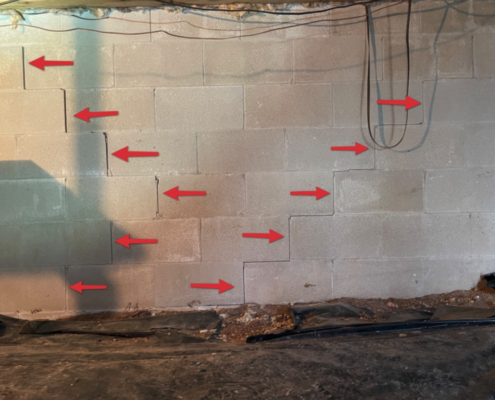
Stair-step cracks follow the mortar joints in concrete block or brick foundation walls.
What Causes Stair-Step Cracks?
These cracks commonly occur because of:
- Differential settlement
- Soil movement
- Foundation shifting
- Drainage problems
What Do Stair-Step Cracks Mean?
Small stair-step cracks may be cosmetic, but larger or expanding cracks can indicate foundation movement. The severity depends on the crack’s width, displacement, and progression.
Signs of a Potential Structural Issue
- Cracks wider than 1/4 inch
- Sections of wall shifting out of alignment
- Doors and windows becoming difficult to operate
- Visible foundation settlement
Diagonal Foundation Cracks
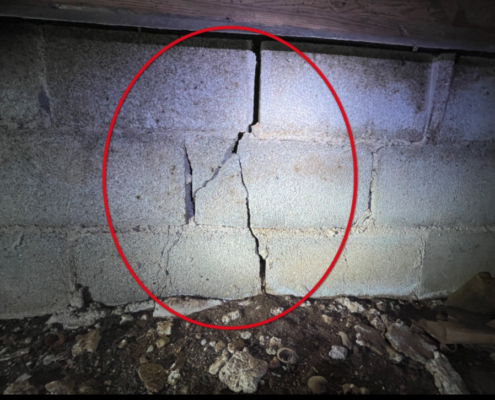
Diagonal cracks typically extend at an angle of 30 to 75 degrees.
Common Causes
Diagonal cracking often indicates uneven settlement where one portion of the foundation is moving differently than another.
Potential causes include:
- Soil erosion
- Poor compaction during construction
- Water-related soil movement
- Tree root activity
Should You Be Concerned?
Diagonal cracks deserve attention because they may signal active settlement. A professional home inspection can help determine whether movement is ongoing.
Shrinkage Cracks
Shrinkage cracks develop as concrete cures and loses moisture.
Characteristics of Shrinkage Cracks
- Usually very narrow
- Often vertical
- Typically appear within the first few years after construction
- Generally do not exhibit displacement
Are They a Problem?
Most shrinkage cracks are cosmetic and do not affect structural integrity. However, they can become pathways for moisture intrusion if left unsealed.
What Crack Width Tells You
In addition to crack patterns, width matters.
Hairline Cracks
Hairline cracks are often associated with normal curing and minor settlement.
Moderate Cracks
Cracks between 1/8 and 1/4 inch should be monitored for changes.
Wide Cracks
Cracks exceeding 1/4 inch may indicate significant movement and warrant professional evaluation.
Signs Foundation Cracks May Be Getting Worse
Watch for these indicators:
- Cracks becoming wider over time
- New cracks appearing
- Foundation walls bowing or leaning
- Uneven floors
- Sticking doors and windows
- Water entering the basement or crawl space
If you notice any of these symptoms, scheduling a professional inspection is recommended.
Schedule a Professional Home Inspection by a Certified Master Home Inspector
Foundation cracks can range from harmless cosmetic issues to indicators of significant structural movement. Understanding the difference starts with recognizing the crack pattern and knowing what warning signs to watch for.
If you’re buying a home, selling a property, or concerned about foundation cracks in your current residence, Smith & Smith Home Inspections is here to help.
At Smith & Smith Home Inspections, we specialize in thorough, unbiased inspections for homes in Murfreesboro, Smyrna, Shelbyville, Lebanon, Manchester, Columbia and all surrounding Middle Tennessee communities.
Contact Smith & Smith Home Inspections today to schedule your inspection and gain peace of mind about your home’s structural condition.


Leave a Reply
Want to join the discussion?Feel free to contribute!