
Thermal Imaging Home Inspections in Murfreesboro, TN: Hidden Hazards to Watch For
What Can Thermal Imaging Reveal During a Home Inspection? Hidden Safety and Structural Hazards in Murfreesboro, TN
Published by Smith & Smith Home Inspections | Murfreesboro, Tennessee
When buying a home, what you can see is only part of the story. Water can leak behind walls, electrical components can overheat inside panels, insulation can be missing above finished ceilings, and moisture can accumulate in crawl spaces long before obvious damage appears.
That is why thermal imaging is such a valuable tool during a professional home inspection in Murfreesboro, TN, and throughout Middle Tennessee.
At Smith & Smith Home Inspections, we include infrared thermal imaging in our home inspections to help identify temperature patterns that may indicate hidden moisture, insulation deficiencies, electrical hot spots, and other conditions that deserve further investigation.
Whether you are buying a brand-new home, an older property, or a million-dollar house, thermal imaging can help uncover potential problems that a traditional visual inspection alone might not reveal.
What Is Thermal Imaging in a Home Inspection?
Thermal imaging uses an infrared camera to measure surface temperatures and display temperature differences as a thermal image. These differences can help a home inspector identify unusual patterns that may be associated with moisture intrusion, missing insulation, air leakage, or overheating electrical components.
For example, a section of ceiling affected by a roof leak may have a different temperature pattern than the surrounding ceiling. An area of missing attic insulation may appear noticeably different from properly insulated areas under suitable conditions.
An important distinction: Thermal cameras do not see directly through walls, and a temperature difference does not automatically prove a defect exists. An experienced home inspector evaluates the thermal image alongside visible evidence, the home’s construction, environmental conditions, and other inspection findings.
The purpose is to identify potential concerns that warrant closer inspection—not to guess at problems or rely on a camera alone.
1. Hidden Water Leaks and Moisture Intrusion
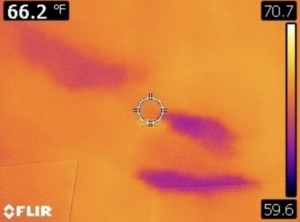
One of the most useful applications of thermal imaging during a home inspection is identifying temperature patterns that may be associated with hidden moisture.
Water intrusion can damage building materials, contribute to wood decay, and create conditions favorable for microbial growth if moisture problems persist.
In some cases, water damage develops behind finished surfaces before homeowners notice discoloration, bubbling paint, or other visible warning signs.
Thermal imaging may help identify suspicious areas around:
- Ceilings beneath bathrooms: Plumbing leaks or failures around tubs, showers, and drain connections may affect nearby building materials.
- Exterior walls and windows: Failed flashing, deteriorated sealants, or water intrusion around windows and doors may produce unusual temperature patterns.
- Roof and ceiling areas: Roof leaks, damaged flashing, and other water-entry points can affect the materials below them.
- Plumbing walls: Leaking supply or drain lines may create temperature differences in surrounding surfaces.
- Crawl spaces and subfloor areas: Moisture-related temperature patterns may indicate areas that need closer evaluation for leaks, dampness, or deterioration.
In Murfreesboro and the surrounding Middle Tennessee area, identifying moisture concerns is particularly important when evaluating homes with crawl spaces, plumbing concealed within finished walls, and roofs exposed to repeated storms.
Finding a potential moisture problem early can help homeowners determine whether further investigation or repairs are necessary before damage becomes more extensive.
2. Electrical Hot Spots and Potential Fire Hazards
Electrical problems are among the most important safety concerns to identify during a home inspection.
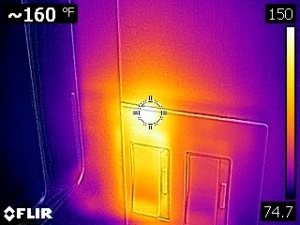
Loose electrical connections, overloaded circuits, deteriorating components, and other electrical defects can sometimes produce abnormal heat. Under suitable operating conditions, thermal imaging may help identify unusual temperature patterns in accessible electrical equipment.
Areas that may warrant additional attention include:
- Electrical breaker panels and breakers
- Accessible electrical connections and components
- Circuits or components operating at unusually high temperatures
- Electrical equipment displaying localized hot spots
An unusual hot spot does not automatically mean an electrical fire is imminent. Electrical loads, component design, ambient temperatures, and other factors can influence thermal readings. However, an unexplained temperature anomaly can be an important reason to investigate further.
Electrical safety should never be determined by appearance alone. Some dangerous electrical defects produce no noticeable heat during an inspection, particularly when the circuit is not under a significant load.
If a potentially hazardous condition is identified, a qualified electrician may need to evaluate the equipment and determine the appropriate corrective action. Electrical panels should only be examined using safe inspection procedures, and covers should not be removed when doing so would create an unacceptable hazard.
3. Missing or Displaced Attic Insulation
A home may look perfectly finished while important areas above the ceilings are missing insulation.
Thermal imaging can help identify temperature patterns associated with missing, displaced, compressed, or insufficient insulation when the temperature difference between the interior and exterior is adequate.
Potential problem areas include:
- Missing insulation above bedrooms or other finished rooms
- Insulation displaced around attic access openings
- Gaps near exterior wall-to-ceiling transitions
- Uneven insulation coverage in accessible attic areas
- Areas where air leakage may be contributing to uneven temperatures
Insulation deficiencies can contribute to uncomfortable rooms, increased heating and cooling costs, and uneven indoor temperatures.
In some circumstances, air leakage and moisture movement can also contribute to condensation within building assemblies. Whether that occurs depends on the construction details, indoor humidity, ventilation, and weather conditions.
Thermal imaging helps identify areas that deserve closer examination, but the actual insulation condition should be verified through an appropriate visual inspection whenever accessible.
4. Hidden Moisture and Wood Deterioration in Crawl Spaces
Crawl spaces deserve particular attention during home inspections in Middle Tennessee.
Water intrusion, plumbing leaks, poor drainage, and elevated moisture levels can affect floor framing and other wood components. Over time, persistent moisture can contribute to wood decay and conditions that may attract wood-destroying organisms.
Thermal imaging may help reveal unusual temperature patterns near:
- Subflooring and floor framing
- Plumbing lines and drain connections
- Areas near HVAC equipment and condensate drains
- Locations beneath bathrooms and kitchens
- Sections of the crawl space where moisture intrusion is suspected
However, thermal imaging cannot determine the structural strength of a floor joist or prove that wood rot is present. Moisture meters, visual examination, and additional evaluation may be necessary to confirm the condition of the materials.
A soft or deteriorated floor structure, damaged framing, or significant moisture intrusion may require further assessment by an appropriate professional.
A clean-looking living room does not guarantee that the structure underneath it is in good condition. Inspecting the accessible crawl space and investigating suspicious findings are important parts of understanding a home’s overall condition.
5. Roof Leaks and Failed Flashing
A roof can appear acceptable from the ground while concealed water intrusion affects the attic or ceiling below.
Roofing defects involving flashing, penetrations, valleys, and other vulnerable areas can allow water to enter the building. Depending on the circumstances, that moisture may produce temperature patterns that can be detected with an infrared camera.
During a home inspection, thermal imaging may help identify suspicious areas associated with:
- Roof leaks and moisture-damaged ceiling materials
- Failed flashing around chimneys or other roof penetrations
- Water intrusion around skylights
- Moisture patterns near roof-to-wall intersections
- Areas requiring closer examination of the roof, attic, or ceiling
Thermal imaging is most useful when conditions support meaningful temperature differences. A leak that has dried, a small leak, or water that has not produced a detectable temperature contrast may not be visible on the camera.
That is why thermal imaging should complement—not replace—a thorough roof and attic inspection.
When suspicious patterns are found, the inspector can document the location and recommend appropriate follow-up to help determine the source and extent of the problem.
6. HVAC Problems and Air Leakage
Heating and cooling problems can affect comfort, energy use, and the overall performance of a home.
Thermal imaging can help identify uneven surface temperatures that may be associated with HVAC distribution problems or air leakage.
Examples include:
- Supply registers that do not appear to deliver conditioned air as expected
- Uneven temperatures between rooms
- Possible air leakage around windows and exterior doors
- Temperature patterns suggesting gaps in insulation or air sealing
- Areas near ductwork that warrant further investigation
These findings can be particularly useful when a room feels noticeably warmer or colder than the rest of the home.
However, an infrared camera does not directly measure airflow or determine whether an HVAC system is properly sized. Additional evaluation may be needed to identify the cause of an unusual temperature pattern.
7. Temperature Patterns That May Indicate Concealed Structural Concerns
Thermal imaging can sometimes reveal patterns that justify a closer look at a home’s walls, ceilings, floors, and other building components.
For example, an area with missing insulation may make framing members more visible in a thermal image. A suspicious temperature pattern near a foundation wall could warrant further investigation for moisture intrusion or other conditions affecting the surrounding materials.
These findings may lead an inspector to investigate concerns involving:
- Moisture-affected wall or floor assemblies
- Possible concealed water damage
- Insulation gaps around framing
- Areas where deterioration may be suspected based on additional visible evidence
- Unusual temperature patterns near foundations or other structural components
It is important to understand the limits of this technology. Thermal imaging cannot diagnose foundation movement, measure the strength of framing, or confirm structural damage by itself.
Foundation cracks, sloping floors, deteriorated framing, and other structural concerns must be evaluated using appropriate inspection methods. If significant defects are suspected, further assessment by a qualified structural professional may be recommended.
The real value of thermal imaging is that it can help direct attention toward areas that might otherwise go unnoticed.
Can Thermal Imaging Detect Mold?
This is a common question from homebuyers.
No. A thermal camera cannot identify mold or confirm that mold is present.
It can sometimes reveal temperature patterns associated with moisture intrusion or damp building materials. Those conditions may increase the potential for microbial growth if they persist, but a thermal image alone cannot establish whether mold exists.
If an inspection reveals suspicious moisture patterns, the appropriate next step is to investigate the source of the moisture and evaluate the affected materials. Depending on the circumstances, additional moisture measurements, an air quality assessment, or other professional evaluation may be appropriate.
Finding and addressing the underlying moisture problem is essential to preventing recurring damage.
Can Thermal Imaging Find Every Hidden Problem in a House?
No inspection tool can identify every concealed defect.
Thermal imaging works best when suitable temperature differences exist and the conditions allow meaningful interpretation of the images. Weather, sunlight, indoor and outdoor temperatures, surface materials, reflective surfaces, and the timing of an inspection can all affect the results.
A thermal camera also cannot reliably identify every plumbing leak, electrical defect, insulation problem, or structural concern.
For these reasons, thermal imaging should be used as part of a comprehensive home inspection rather than as a standalone test.
At Smith & Smith Home Inspections, infrared findings are considered alongside the home’s visible condition and other relevant inspection observations. When a potential problem needs further evaluation, the goal is to document the concern clearly so the client can make an informed decision about the next steps.
Why Thermal Imaging Matters When Buying a Home in Murfreesboro, TN
Whether you are purchasing an existing home or a newly constructed property, hidden defects can lead to unexpected repairs after closing.
A new home is not automatically free of problems. Missing insulation, water intrusion, installation defects, and electrical concerns can occur in properties of any age.
A thermal imaging home inspection in Murfreesboro, TN, can provide additional information about temperature patterns that may indicate problems in areas that are difficult to evaluate visually.
This technology is particularly useful when combined with careful inspection of the roof, attic, crawl space, foundation, electrical system, plumbing, and HVAC equipment.
The objective is not to make every home appear defective. It is to help buyers understand the property’s condition, identify concerns that deserve attention, and reduce the chance of unpleasant surprises after moving in.
Why Choose Smith & Smith Home Inspections?
Smith & Smith Home Inspections provides comprehensive home inspections in Murfreesboro, TN, and throughout the Greater Middle Tennessee area.
Owner and inspector Tyler Smith brings hands-on experience with framing, construction, and remodeling to the inspection process. The business is Tennessee licensed and holds InterNACHI Certified Master Inspector credentials.
Our home inspections include thermal imaging to help identify potential moisture-related issues, insulation deficiencies, electrical hot spots, and other unusual temperature patterns that warrant further investigation.
We also provide:
- Comprehensive home inspections for buyers and sellers
- Inspections of accessible structural components, crawl spaces, attics, and roofs
- Evaluation of major electrical, plumbing, and HVAC systems
- Detailed reports with high-definition photographs and videos
- Same-day inspection reports
- Fast scheduling and clear explanations of inspection findings
Smith & Smith Home Inspections serves Murfreesboro, Smyrna, Lebanon, Nashville, Franklin, Shelbyville, Manchester, La Vergne, and surrounding Middle Tennessee communities.
When you are making one of the largest investments of your life, you deserve a clear understanding of the home’s condition—not just a quick look at the visible surfaces.
Schedule a Thermal Imaging Home Inspection in Murfreesboro, TN
Are you buying a home in Murfreesboro or anywhere in Middle Tennessee? Do not rely on appearances alone.
Smith & Smith Home Inspections uses thermal imaging as part of a comprehensive inspection to help identify potential hidden moisture, insulation deficiencies, electrical hot spots, and other conditions that may deserve closer evaluation.
Call or text Smith & Smith Home Inspections at (615) 605-0370 to schedule your home inspection.
Visit www.smithsmithhomeinspections.com to learn more about our services.
Smith & Smith Home Inspections — Thorough inspections. Clear answers. Better-informed homebuyers.
Frequently Asked Questions About Thermal Imaging Home Inspections
What does thermal imaging detect during a home inspection?
Thermal imaging detects surface temperature differences that may indicate hidden moisture, missing insulation, air leakage, uneven HVAC performance, or overheating electrical components. Findings may require additional investigation to confirm the underlying cause.
Does thermal imaging see through walls?
No. An infrared camera measures the apparent surface temperature of the wall or other surface it is viewing. It does not see through drywall, insulation, or other building materials. Temperature patterns can sometimes reveal clues about conditions behind those surfaces.
Can thermal imaging detect water leaks behind walls?
Thermal imaging may reveal temperature patterns associated with a hidden plumbing leak or moisture intrusion. However, it cannot confirm a leak in every situation, and additional testing may be necessary.
Can thermal imaging detect electrical fire hazards?
It may identify abnormal heat patterns in accessible electrical equipment under suitable operating conditions. Not every electrical hazard produces detectable heat, so thermal imaging does not replace a proper electrical inspection.
Can thermal imaging detect foundation problems?
Thermal imaging may help identify temperature patterns that warrant further investigation, including some moisture-related concerns near foundation walls. It cannot independently diagnose foundation movement, determine structural integrity, or confirm the cause of a crack.
Is thermal imaging useful for new construction inspections?
Yes. Thermal imaging may help identify missing insulation, temperature inconsistencies, and possible moisture-related concerns in newly constructed homes. New construction should still receive a comprehensive inspection of accessible systems and components.
Does Smith & Smith Home Inspections include thermal imaging?
Yes. Smith & Smith Home Inspections includes thermal imaging in its home inspections in Murfreesboro, TN, and the Greater Middle Tennessee area.
Who should schedule a thermal imaging home inspection?
Homebuyers, homeowners, and sellers can all benefit from a comprehensive inspection that incorporates thermal imaging. It can be especially useful when there are unexplained temperature differences, suspected moisture problems, or concerns about insulation and other concealed conditions.
Ready to schedule? Call or text (615) 605-0370.

Leave a Reply
Want to join the discussion?Feel free to contribute!